Memory In-Between: Remote Revisit
As the earliest universe of my childhood, home taught me the full significance of territory and shelter, the metaphysics of inside and out, the symbolism of doors, windows, and roofs. I spent sixteen years in my old home, an apartment, in Chongqing, China. Two years ago, for some reason, my parents had to sell the property. When home becomes unvisitable, memory and digital particle-composed scene become the only approaches to recall those either ordinary or sparkling moments of home.
In this exploration, I asked my grandmother to record the whole process with her phone from the lift hall to the door of our old apartment. The video is about nothing but the corridor that I had walked through countless times. The corridor is true and it’s truer in my memory - the exposed cable, the dusky light, the mold and stain at the corner of wall and the clothes hung by an unknown neighbour — all these elements in the corridor weaved an indescribable and sophisticated scene, a scene took a lot of my imagination to experience.
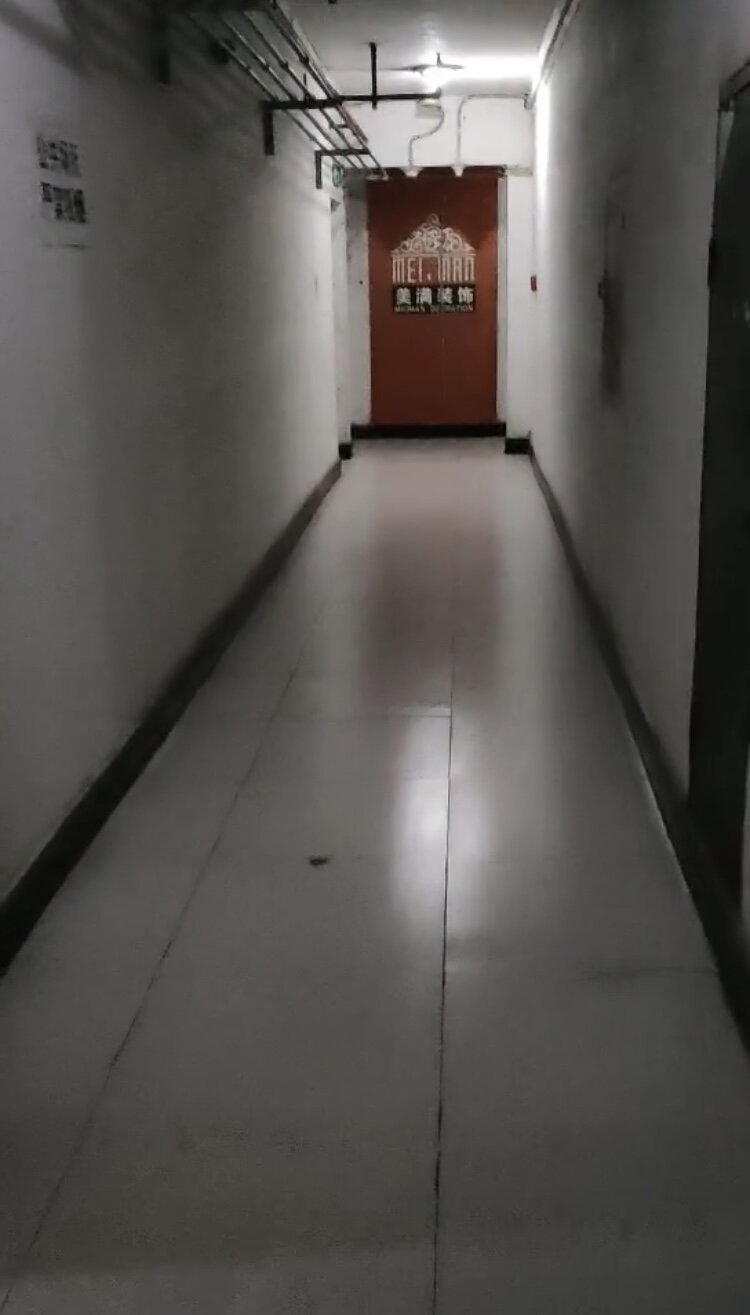
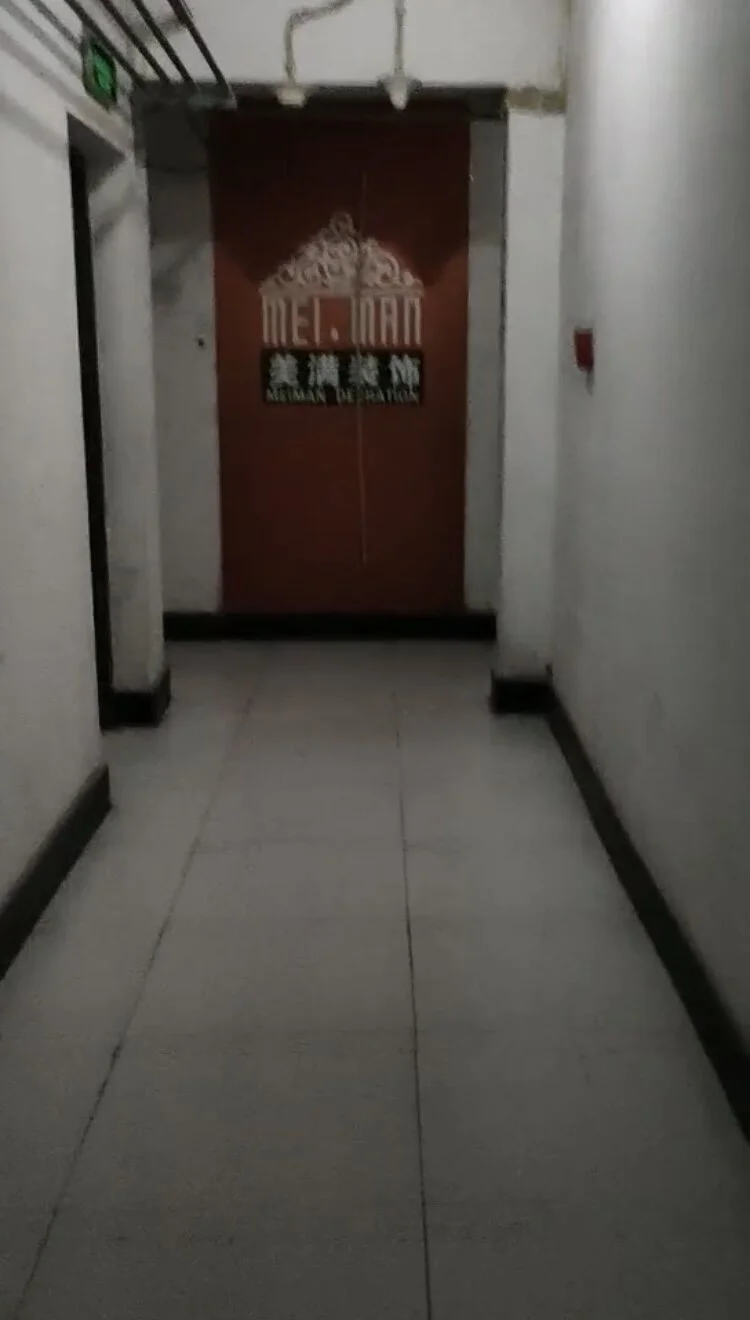
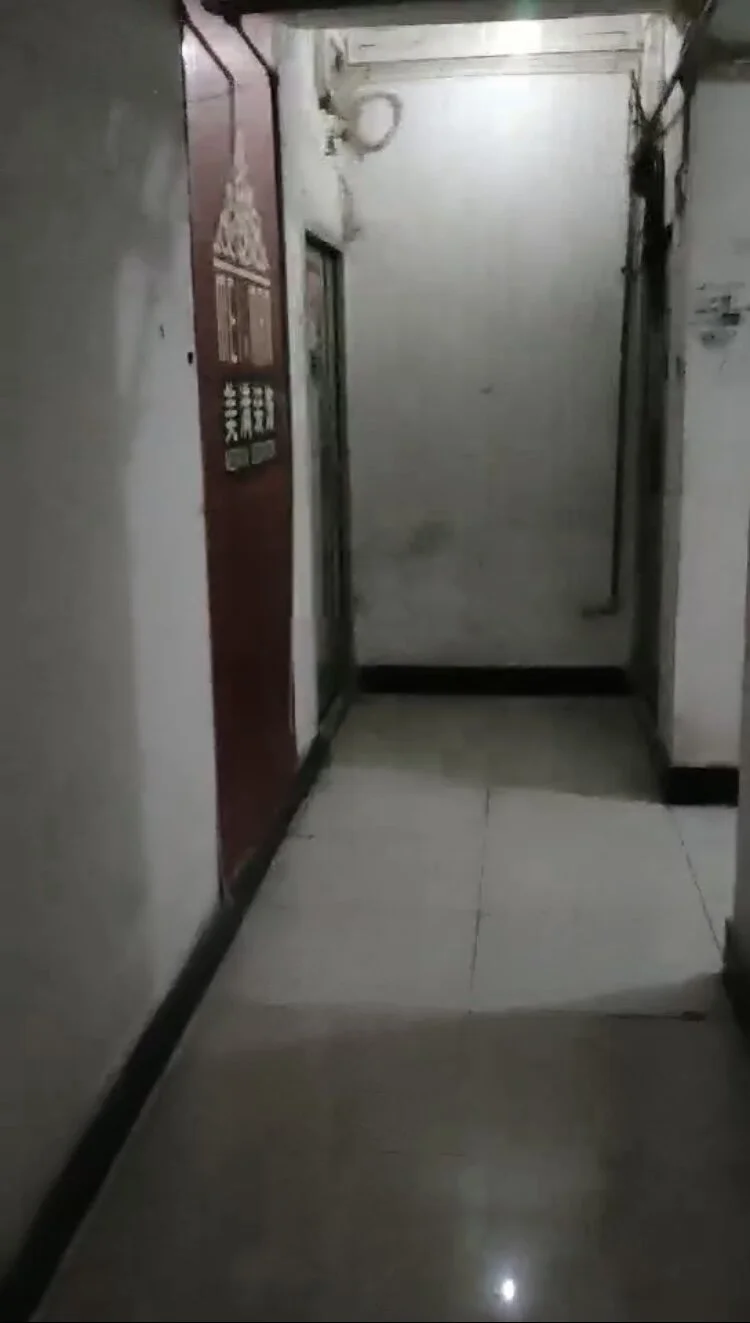
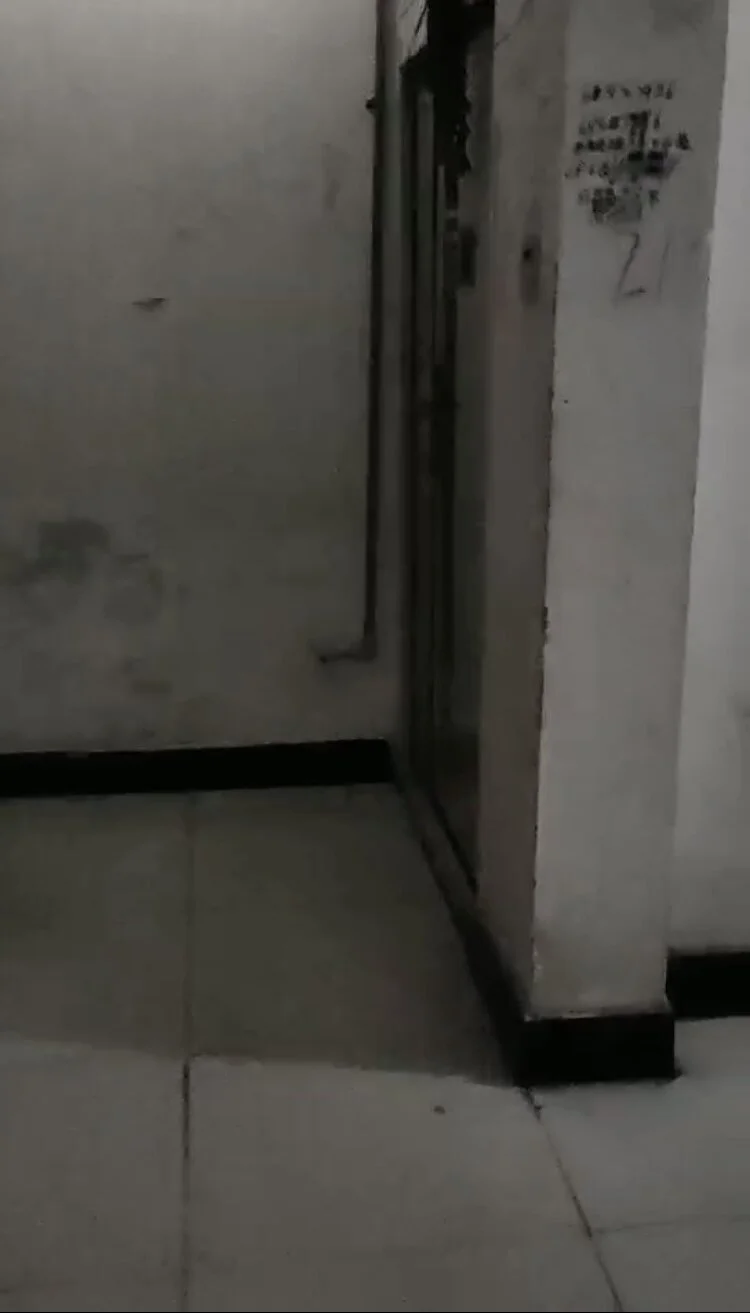
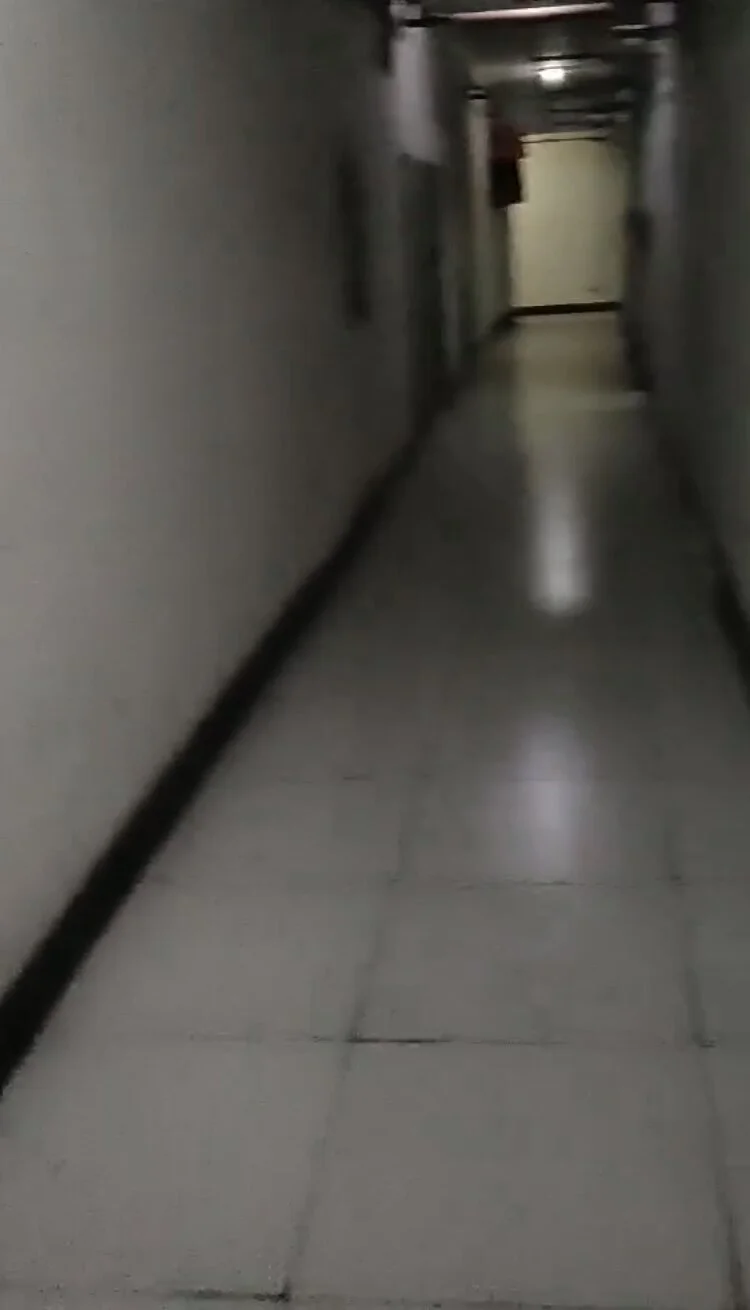
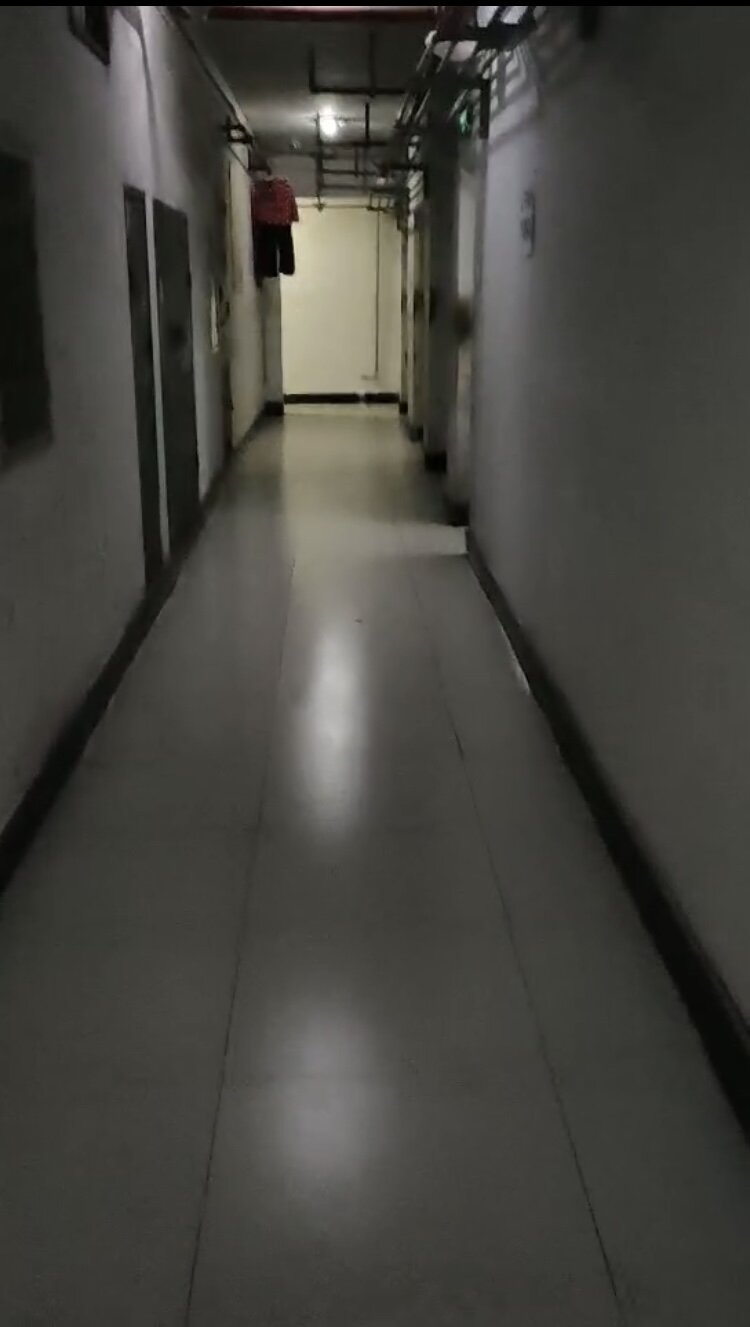
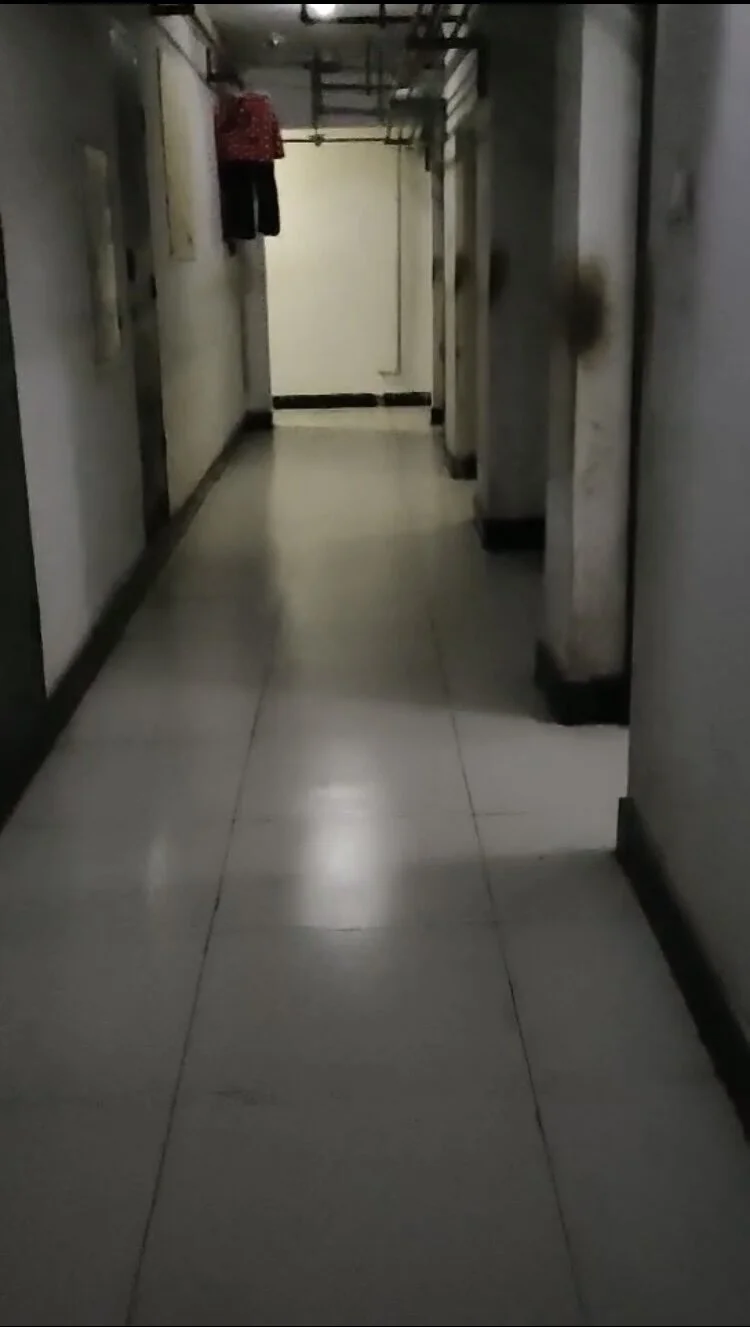
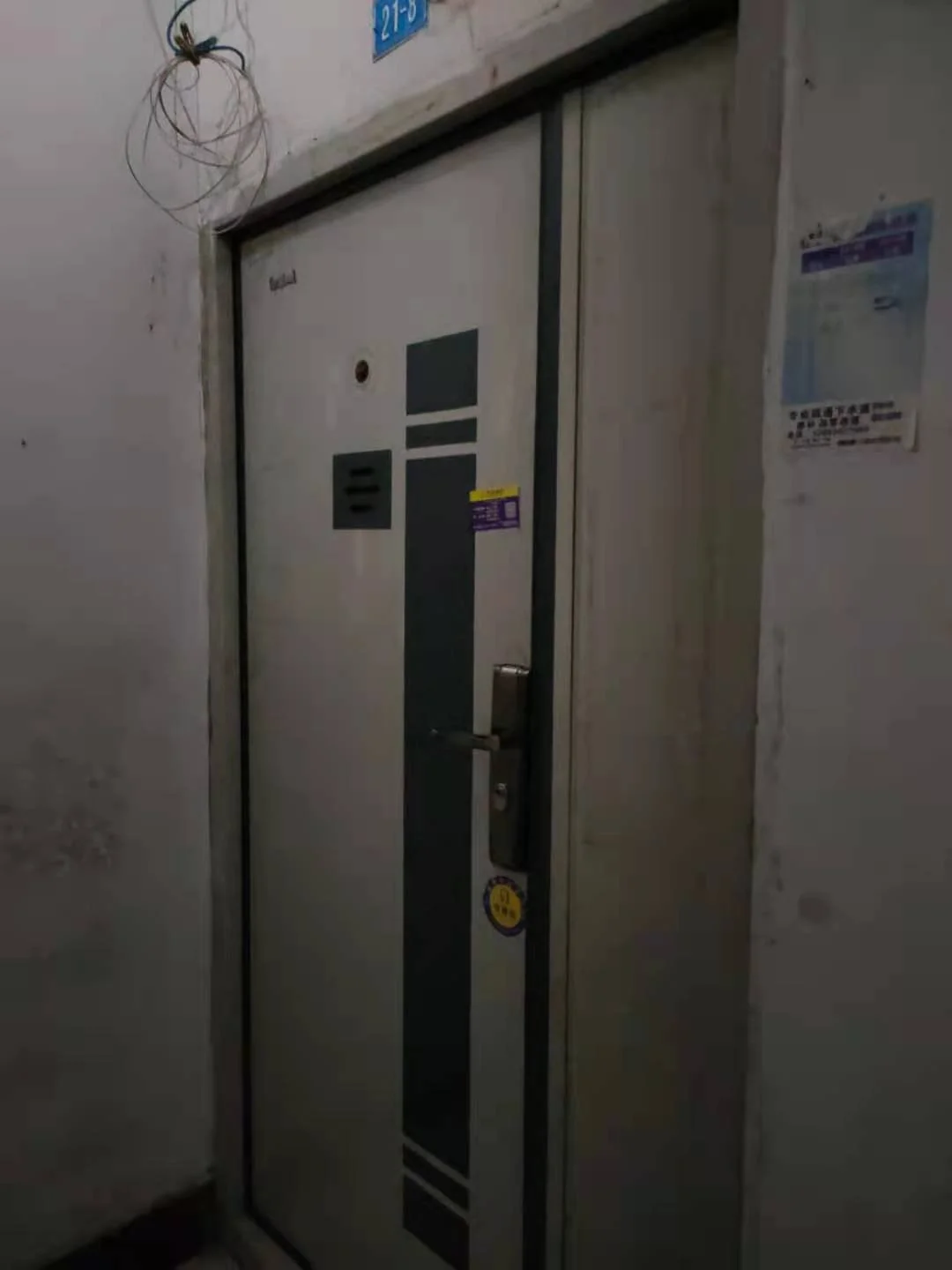
The corridor conceived by camera is as saturated with emotion and as real as its physical existence. The video is not only a symbol that directly portrays the space itself; it is a projection of my existential experience which buried deep in my embodied memory.
The corridor is unmaintained much duskier than it I remember. “So many of our old neighbours moved away”, grandma said. “What about the neighbour who’s doing decorating business?” I asked, for I‘ve seen the familiar large advertising board on the wall. “They left too”, answered by grandma, “and I have no idea where they went.”
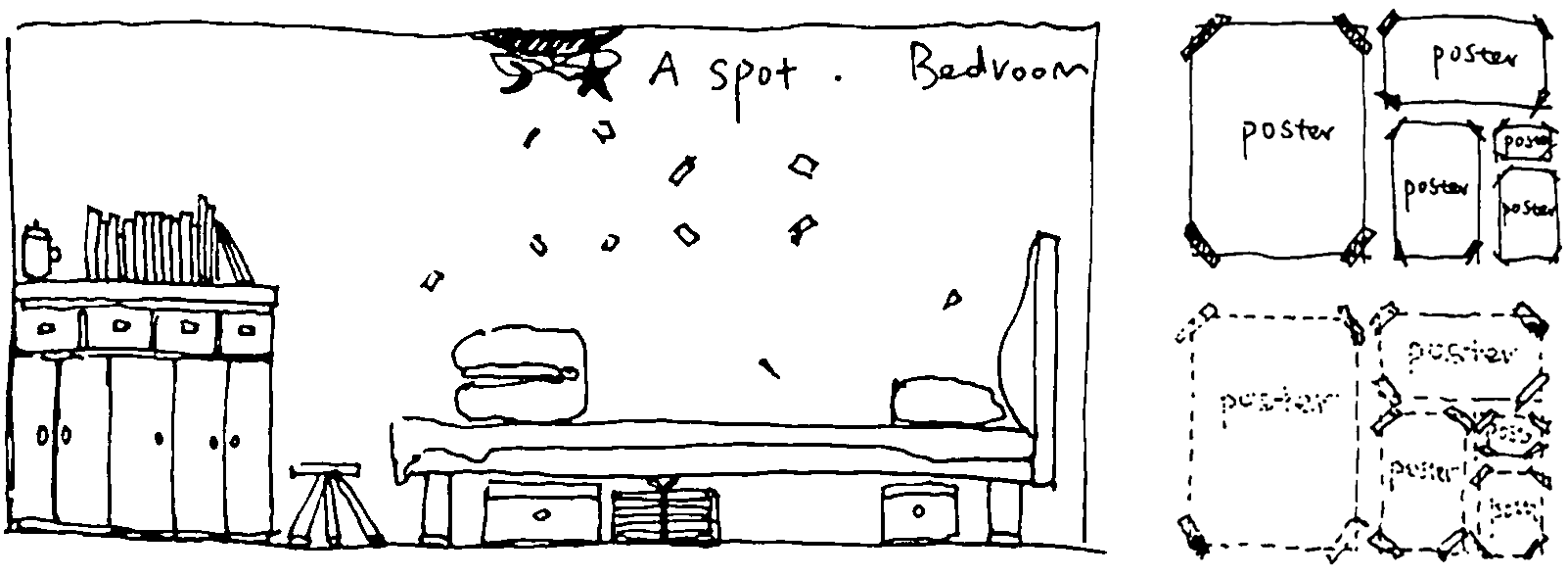
(Right) Posters were taken down yet the marks of tape left on the wall in the following years.
(Left) Hand-drawn elevation of the bedroom of my childhood.
The elevation of my bedroom is the first step of visualization of my memory of home. The door of the memory palace has slowly opened since I put the first stroke onto the paper. — the pink wall that has never been painted in the past ten years or so, the mug and stacked books on the chest, the shoe box collected by my grandmother under my bed, and the marks left by tape on the wall. There was a period of time that I was keen to put all my collected posters on the wall; several years after that, the posters had been pin-downed, and some parts of the wall skin had been peeled off along with the posters. The acrylic painting below is based on the marks as a mimic of the imperfection of my old home.
Three layers of media were applied on the canvas – white glue was applied between the two layers of acrylic paint to help peel off the top layer of paint.
“Literature is made at the boundary between self and the world, and during the creative act this borderline softens, turns penetrable and allows the world to flow into the artist and the artist to flow into the world.” (Pallasmaa 2009)
The mental impact brought by the artwork arises from the experiences of my authentic sense of life. I encountered myself, my emotion, and my own past in an intensified manner while creating the painting.
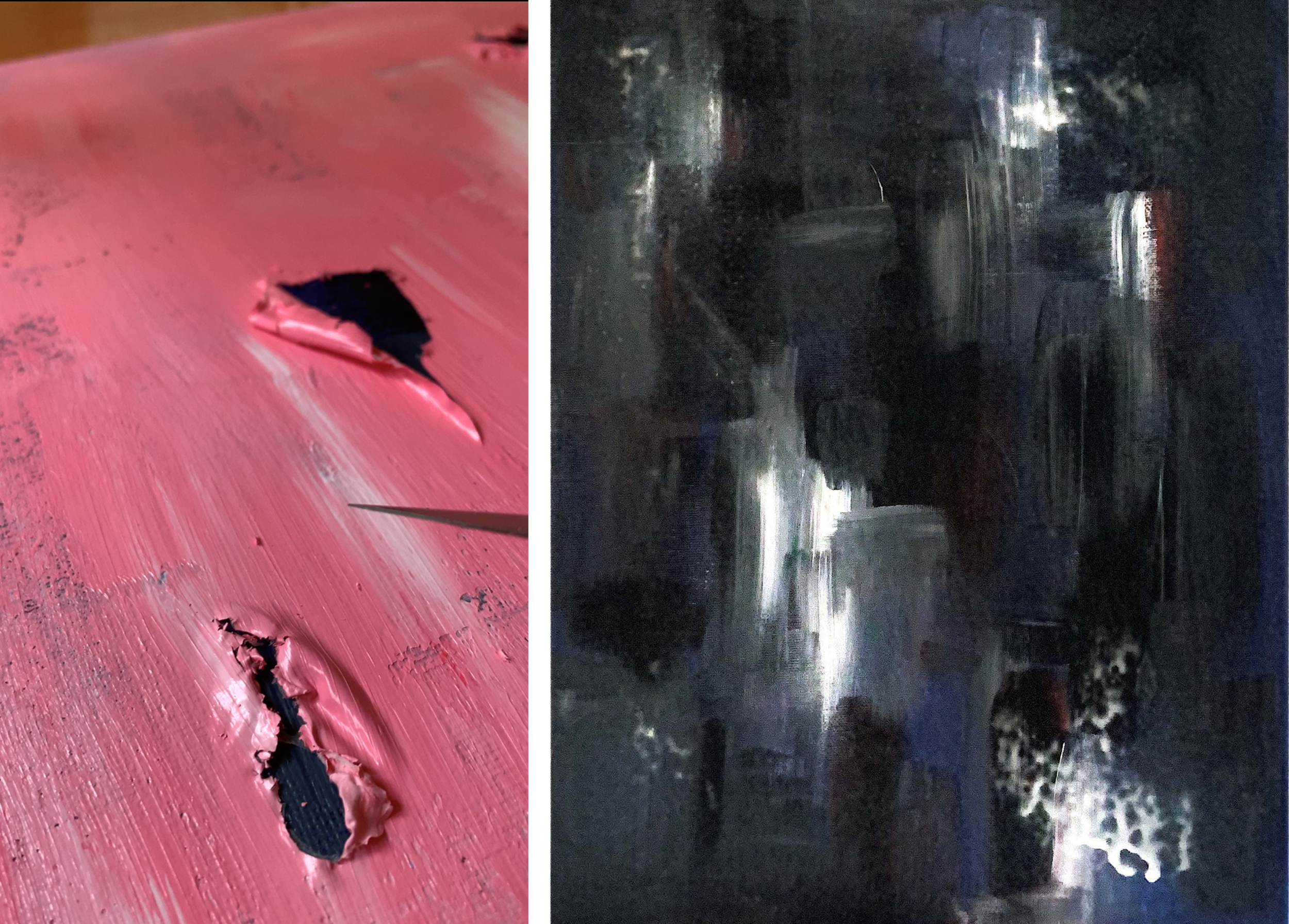
(Left) I used scalpel to tear and peel the top layer of paint from canvas.
(Right) Scan of the bottom layer of painting.